Get Connected: Old Website 360°
Follow Us:

Departments@GMRIT-DU Civil Engineering

About the Department

The Civil Engineering (CIVIL) Department at GMR Institute of Technology (Deemed to be University) is committed to developing competent engineers with strong foundations in structural, geotechnical, transportation, and environmental engineering. The department focuses on delivering quality education, fostering innovation, and promoting research in sustainable infrastructure development.

With a balanced blend of theoretical knowledge and practical exposure, the department equips students to design, analyze, and manage modern infrastructure projects. Graduates are prepared to address real-world challenges and contribute effectively to sectors such as construction, urban development, transportation systems, and environmental sustainability.

Our Vision

To be a preferred department of learning for students and teachers alike, with a commitment towards Academics & Research, serving the students in an atmosphere of innovation, critical thinking and making them Industry ready.

Our Mission

  • To provide adaptable education in a collaborative and innovative environment in skilling the graduates to solve real world problems in the field of Civil Engineering.
  • To prepare the students as critical thinking professionals with multidisciplinary research orientation and Innovation.
  • To instil ethical values and nurture the graduates who will be able to contribute to society.

Highlights of the Department

Placements

25.0 LPA
Highest Package
89%
Placements
33+
Companies Visited
4.31 Lakhs
Average Package

Research

400
Journal Publications
82
Conference Publications
877
FDP's / Workshops

Programs Offered

B.Tech.

UG
B.Tech. in Civil Engineering

Develops expertise in infrastructure design, construction, and sustainable development.

M.Tech.

PG
M.Tech. - Transportation Engineering

Focuses on planning, design, and management of transportation systems.

No current syllabus found

Ph.D.

PhD
Ph.D. in Civil Engineering

Research in sustainable infrastructure, construction technologies, and smart city development.

No current syllabus found

PEO

PEO1
Employ logical and analytical skills in solving complex real-world engineering problems in the areas of Civil Engineering.
PEO2
Adaptable to emerging technologies with enhanced professional skills and ability towards continuous learning, facilitating higher studies and research.
PEO3
Demonstrate professional ethics, leadership qualities, and promote inclusive and collaborative growth with human values towards societal interest.

Program Outcomes (POs) & Program Specific Outcomes (PSOs)

PO1
Apply the knowledge of mathematics, science, engineering fundamentals, and an engineering specialization to the solution of complex engineering problems. (Engineering knowledge).
PO2
Identify, formulate, review research literature, and analyze complex engineering problems reaching substantiated conclusions using first principles of mathematics, natural sciences, and engineering sciences. (Problem analysis)
PO3
Design solutions for complex engineering problems and design system components or processes that meet the specified needs with appropriate consideration for the public health and safety, and the cultural, societal, and environmental considerations. (Design/development of solutions)
PO4
Use research-based knowledge and research methods including design of experiments, analysis and interpretation of data, and synthesis of the information to provide valid conclusions. (Conduct investigations of complex problems)
PO5
Create, select, and apply appropriate techniques, resources, and modern engineering and IT tools including prediction and modeling to complex engineering activities with an understanding of the limitations. (Modern tool usage)
PO6
Apply reasoning informed by the contextual knowledge to assess societal, health, safety, legal and cultural issues and the consequent responsibilities relevant to the professional engineering practice. (The engineer and society)
PO7
Understand the impact of the professional engineering solutions in societal and environmental contexts, and demonstrate the knowledge of, and need for sustainable development. (Environment and sustainability)
PO8
Apply ethical principles and commit to professional ethics and responsibilities and norms of the engineering practice. (Ethics)
PO9
Function effectively as an individual, and as a member or leader in diverse teams, and in multidisciplinary settings. (Individual and team work)
PO10
Communicate effectively on complex engineering activities with the engineering community and with society at large, such as, being able to comprehend and write effective reports and design documentation, make effective presentations, and give and receive clear instructions. (Communication)
PO11
Demonstrate knowledge and understanding of the engineering and management principles and apply these to one’s own work, as a member and leader in a team, to manage projects and in multidisciplinary environments. (Project management and finance)
PO12
Recognize the need for, and have the preparation and ability to engage in independent and life-long learning in the broadest context of technological change. (Life-long learning)
PSO1
Demonstrate the quality and suitability of construction materials.
PSO2
Ability to apply the practical aspect of analysis, design and safe construction practices.

Head of the Department
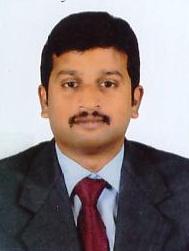
Dr. J. Sridhar
Dr. J. Sridhar
Professor & HOD-CIVIL
M.E., Ph.D.